I
Christ
The Pantocrator, the Mandylion, and the Feasts of the Lord.
ΑΓΙΑ ΕΙΚΩΝ · EST. TRADITION
Icons written by hand in egg tempera and gold leaf, faithful to the canon handed down from Byzantium.
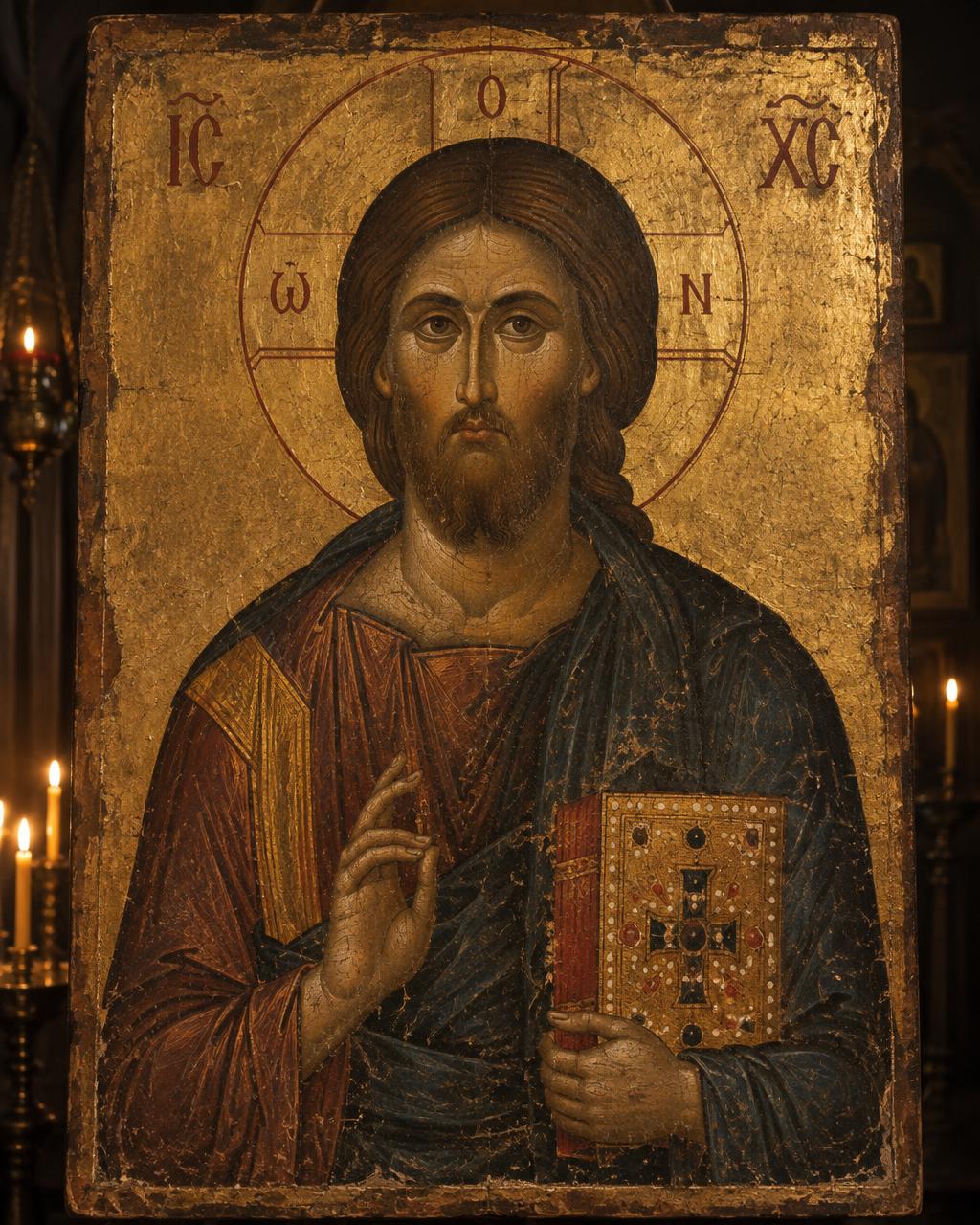
“What the word transmits through the ear, the icon shows silently through the image.”
— SEVENTH ECUMENICAL COUNCIL, 787
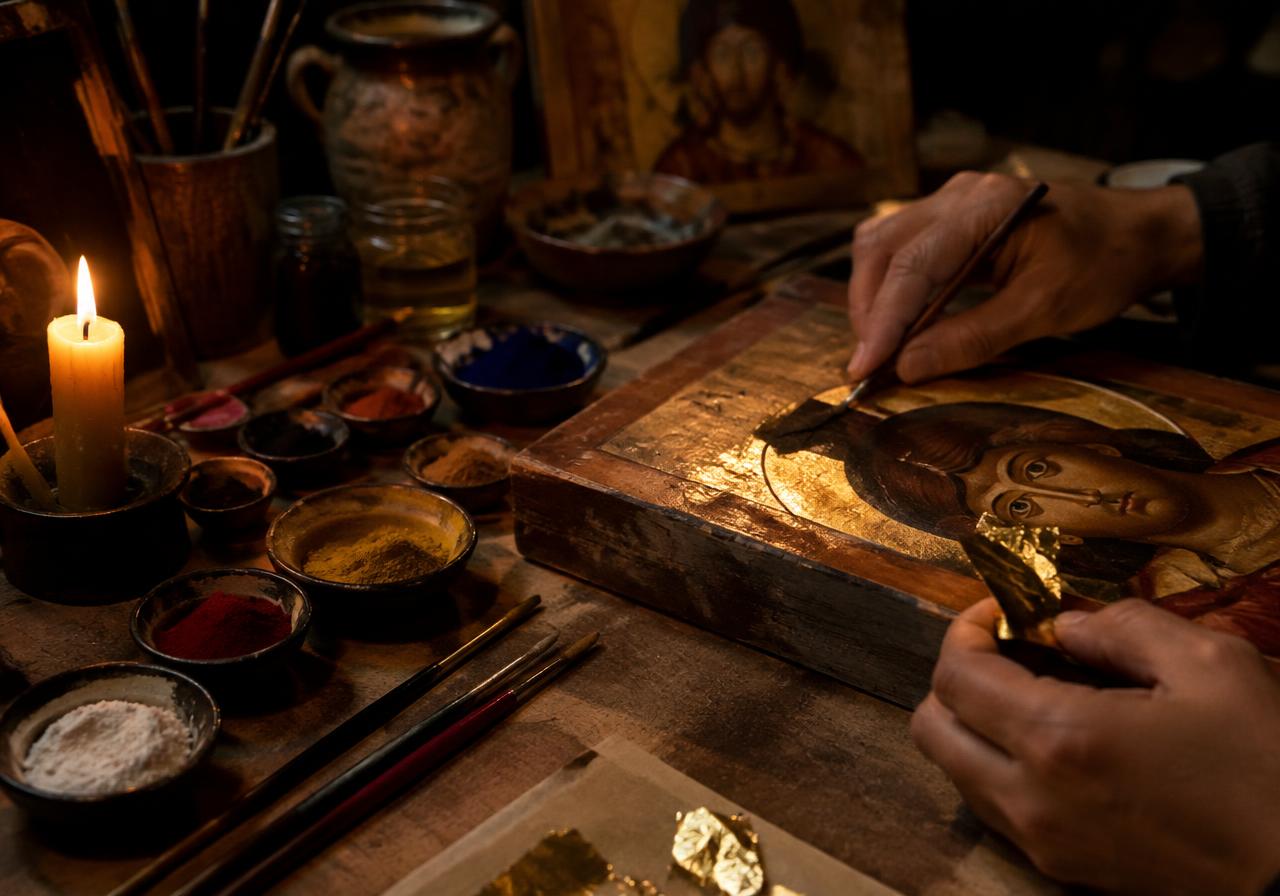
Seasoned linden, gessoed in a dozen thin layers of chalk and rabbit-skin glue.
Leaf laid on bole and burnished by hand — the uncreated light.
Earth pigments bound with yolk, built from shadow toward light.
Each icon is inscribed and offered for blessing before it leaves.
American Orthodox Icons (OCA)
St Alexis Toth, the Carpatho-Russian priest who led thousands of Eastern Catholic immigrants into the Orthodox Church in America; glorified in 1994.
American Orthodox Icons (OCA)
St Tikhon, archbishop of the Orthodox diocese of North America from 1898 to 1907, founder of St Tikhon's Monastery and later Patriarch of Moscow.
American Orthodox Icons (OCA)
The martyrs and missionaries of Alaska in Orthodox iconography: St Juvenaly, St Peter the Aleut and St Jacob Netsvetov, the first American-born saint.
American Orthodox Icons (OCA)
St Innocent (Veniaminov), missionary priest in Unalaska and Sitka, translator for the Aleut people, first bishop of Alaska and later Metropolitan of Moscow.
American Orthodox Icons (OCA)
St Herman of Alaska, monk of the 1794 Valaam mission to Kodiak and hermit of Spruce Island, glorified in 1970 as the first Orthodox saint of North America.
Antiochian Orthodox Icons
Painters of Damascus, Jerusalem and Lebanon who carried Arab Orthodox and Melkite icon painting into the 18th and 19th centuries, including Michael the Cretan.
Antiochian Orthodox Icons
St Raphael Hawaweeny, first Orthodox bishop consecrated in North America and founder of St Nicholas Cathedral, Brooklyn.
Antiochian Orthodox Icons
The Orthodox monastery of Our Lady of Kaftoun in north Lebanon and its medieval double-sided icon of the Virgin and Child and the Baptism of Christ.
Antiochian Orthodox Icons
The Patriarchal Monastery of Our Lady of Saydnaya near Damascus, its founding tradition and the Shaghoura icon attributed to St Luke.
Antiochian Orthodox Icons
How St John of Damascus, a monk of Mar Saba, wrote the classic Orthodox defence of holy images during the first wave of Byzantine Iconoclasm.
Antiochian Orthodox Icons
How four generations of the al-Musawwir family in Aleppo created a distinct Arab Orthodox and Melkite icon style in the 17th and 18th centuries.
Byzantine Mosaics & Art
The 6th-century mosaics of San Vitale in Ravenna: the apse Christ, the Justinian and Theodora panels and the Old Testament programme of the chancel.
Murals of Old Russia
Seventeenth-century church murals of Yaroslavl: the Church of Elijah the Prophet, St John the Baptist at Tolchkovo and the use of the Piscator Bible.
Orthodox Ornament
Tulips, vine scrolls and leather mosaic: the ornament of the Kazan Tatars and its place in the shared decorative language of Muscovite Russia.
Orthodox Frescoes
The 1295 frescoes of the Peribleptos (St Clement) in Ohrid by Michael Astrapas and Eutychios: the Lamentation, Dormition and Life of the Virgin.
Byzantine Icons
Middle Byzantine and Crusader-era icons of Cyprus: Lagoudera, Asinou, the Kykkos tradition and the relief-gesso 'maniera cypria'.
Old Russian Icons
How Old Russian icons show the Nativity: the cave, the reclining Virgin, Joseph and the tempter, the washing of the Child — in Novgorod, Moscow and Rublev's circle.
Russian Orthodox Icons
The earliest surviving icons of Novgorod: the Holy Face, St George of the Yuriev Monastery, the Ustyug Annunciation and their Byzantine roots.
Icons of Mount Athos
The wonderworking icons of Mount Athos — Axion Estin, Portaitissa, Trikheroussa — and the painters Panselinos and Theophanes the Cretan.
Thirteen collections, from the mosaics of Ravenna to the frescoes of Ohrid, are being restored article by article.